

Scholarstic
Foundations of Algorithmic Thinking with Python
Writing code that runs is one skill; writing code that solves a problem efficiently, and that you can explain your reasoning for, is a different and more valuable one — and that second skill is what this course is built around.
Free
Machine Learning with Python: Logistic Regression
Logistic regression is usually the first genuinely useful classification algorithm people learn after linear regression, and it's still one of the most widely deployed models in production — not because it's flashy, but because it's fast, interpretable, and often good enough.
Free
Figma: Building Animations and Interactions
A design that only exists as static frames leaves developers guessing about motion, timing, and behavior — exactly the gap this course closes by teaching you to specify interactions clearly enough that a developer can build them accurately without a single Slack message asking 'wait, how is this supposed to move?' You'll work through Figma's prototyping tools for defining transitions between screens, building convincing micro-interactions (button presses, toggle switches, loading states), controlling easing curves so motion feels natural rather than robotic, and managing component states so a single component can represent hover, active, and disabled variants cleanly.
Free
Machine Learning in Mobile Applications
Running machine learning directly on a phone — rather than sending every request to a server and waiting for a response — unlocks offline functionality, near-instant response times, and meaningfully better privacy since raw data never has to leave the device.
Free
Mastering Reasoning Models: Algorithms, Optimization, and Applications
Reasoning-specialized language models — the kind that show their work through extended chains of thought before answering — behave differently from standard chat models, and getting real value from them means understanding the training techniques that produced that behavior.
Free
Build with AI: Advanced Production-Ready Gradio Applications
There's a wide gap between a Gradio demo that works on your laptop and a Gradio application that survives real users hitting it at unpredictable times — and this course lives entirely on the production side of that gap.
Free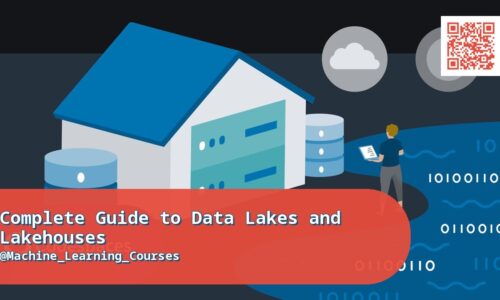
Complete Guide to Data Lakes and Lakehouses
As companies collect more raw, semi-structured, and unstructured data than a traditional warehouse was ever designed to hold, the data lake emerged as the answer — and the lakehouse emerged shortly after to fix what data lakes got wrong.
Free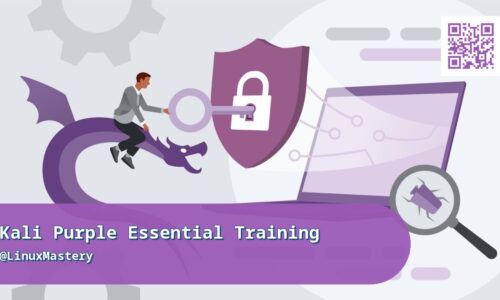
Kali Purple Essential Training
Kali Purple is Offensive Security's answer to a long-standing gap in the Kali ecosystem: for over a decade Kali Linux meant red-team, offense-only tooling, while defensive security lived in a completely separate toolchain.
Free
HTML and CSS: Creating Forms
Forms are the one part of a website where the visitor talks back, and that makes them disproportionately important compared to how much attention they usually get.
Free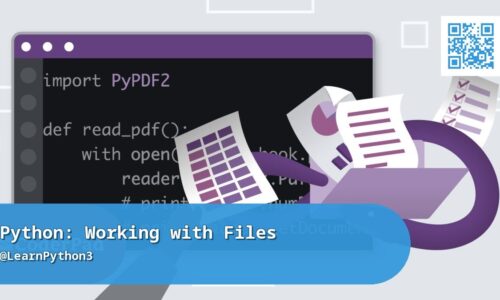
Python: Working with Files
File handling is one of the quiet backbones of real Python programming — the moment a script needs to remember something after it stops running, read a report someone emailed over, or hand data off to another program, it has to touch the filesystem.
Free